
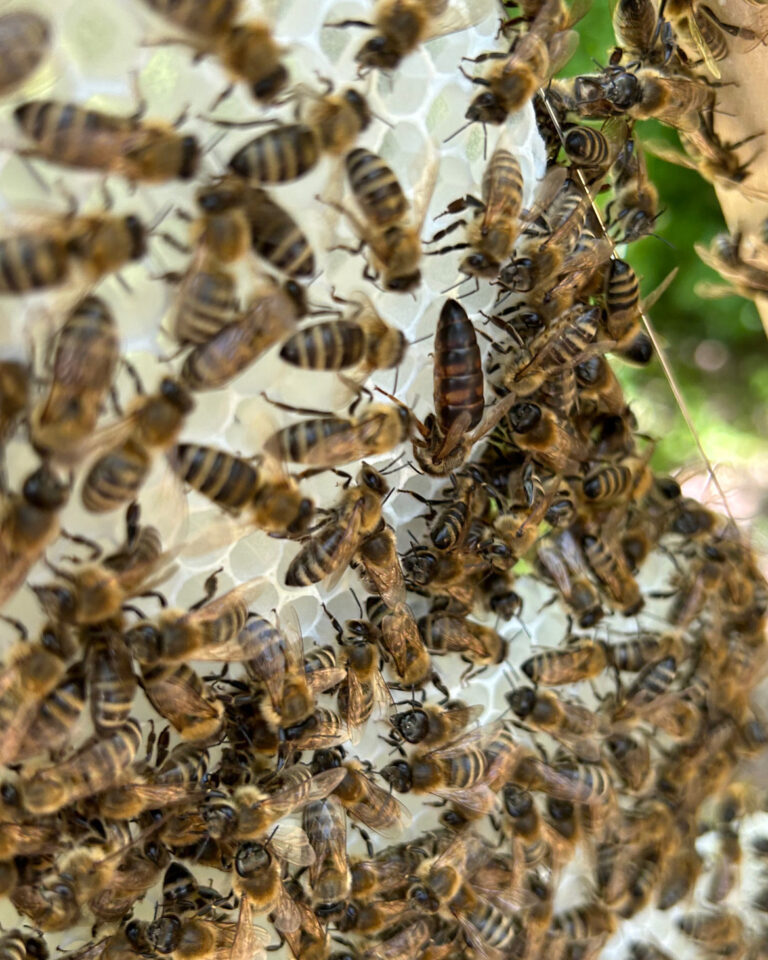
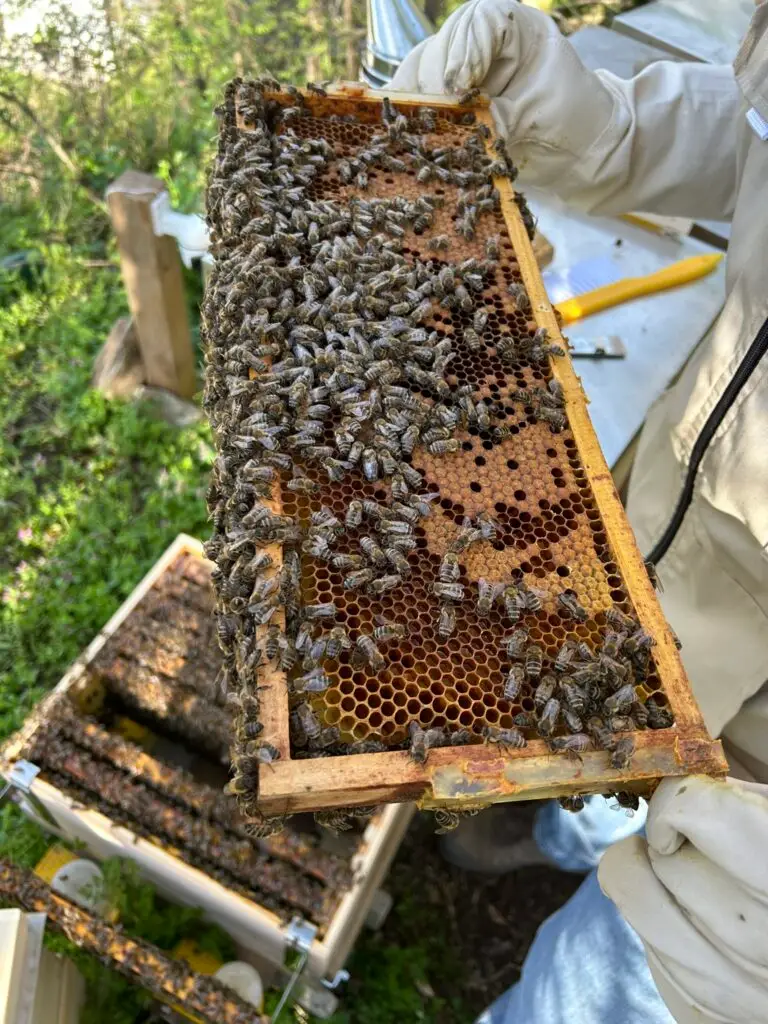
We do not make honey. The bees do.
They collect the nectar, choose the flowers, transform it with their own enzymes, reduce its moisture, store it in wax and let it ripen. Honey is their work — not ours.
Our role is different.
We are keepers.
We create conditions, choose locations, reduce pressure, protect the colonies and harvest only what we can take responsibly. We do not see honey as something to extract at maximum volume. We see it as something entrusted to us.
That is why every decision follows the same principle: Bees first.
Small apiaries instead of crowded mass placement. A limited annual harvest instead of continuous extraction. No monoculture-driven variety chasing. Black glass to protect the honey from unnecessary light. Natural crystallisation accepted as part of honey’s behaviour. Organic certification because trust should be documented, inspected and earned.
For us, premium does not mean louder packaging or artificial perfection.
Premium means restraint.
It means more work where the customer may never see it. More travel. More observation. More patience. More honey left in the hive. More respect for the landscape that made the harvest possible.
The honey in the jar is only the visible part.
Behind it is the part we did not take, the pressure we did not create, the shortcuts we did not use, and the promise we chose to keep.
This is our Beekeeper philosophy:
The bees make the honey.
We simply protect, harvest and preserve it — with respect.
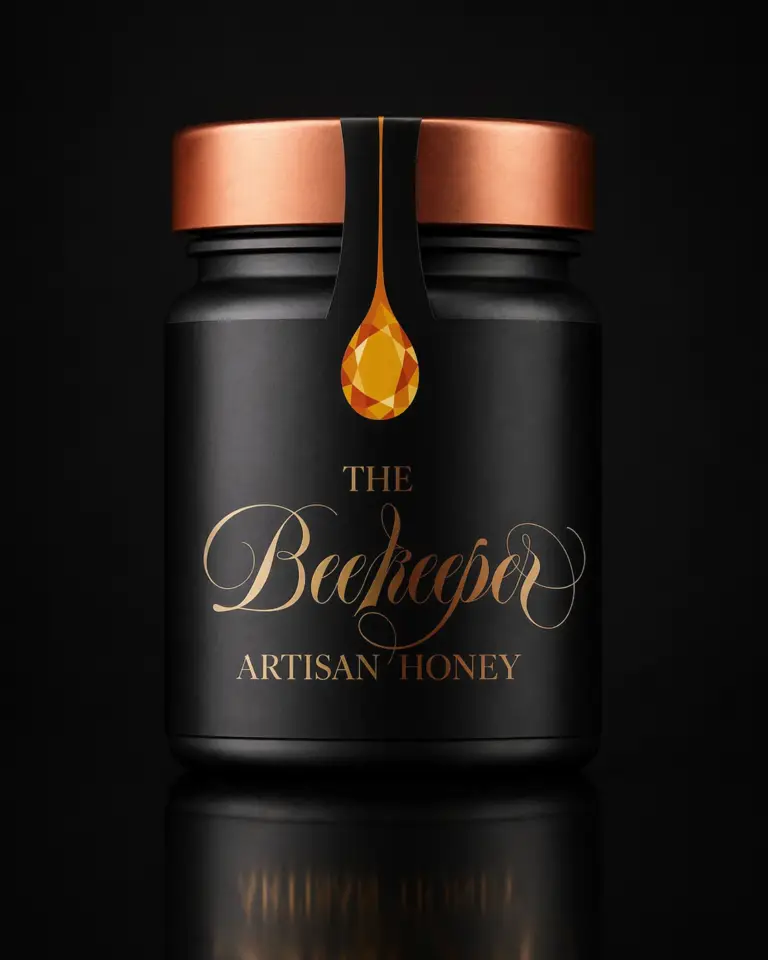
Black glass is not decoration. It is protection.
Honey is not made by us. It is made by bees — from nectar, time, enzymes and, of course, patience.
Our role is different: we keep it, harvest it carefully, and protect what the bees have created.
That is why our honey is filled in a high quality black glass.
Honey is a sensitive natural food. It is not only rich in natural sugars; it also contains organic acids, enzymes and other substances derived from honey collection and ripening. Honey should not be heated or processed in a way that changes its essential composition or impairs its quality. Light and heat can affect sensitive honey components. For optimum activity, unheated honey should be stored in a cool, dark place.
Black glass is therefore not only decoration. It is part of our keeper philosophy. We do not use transparent jars to display honey as a commodity on a shelf. We use black glass to reduce unnecessary light exposure during storage, transport and presentation. The colour of honey may vary naturally from season to season and from landscape to landscape — but we believe protection matters more than display.
This does not mean black glass makes honey better. It means we choose packaging that expresses the tremendous value of this product and helps preserve what is already there.
The bees make the honey.
We simply keep it protected.
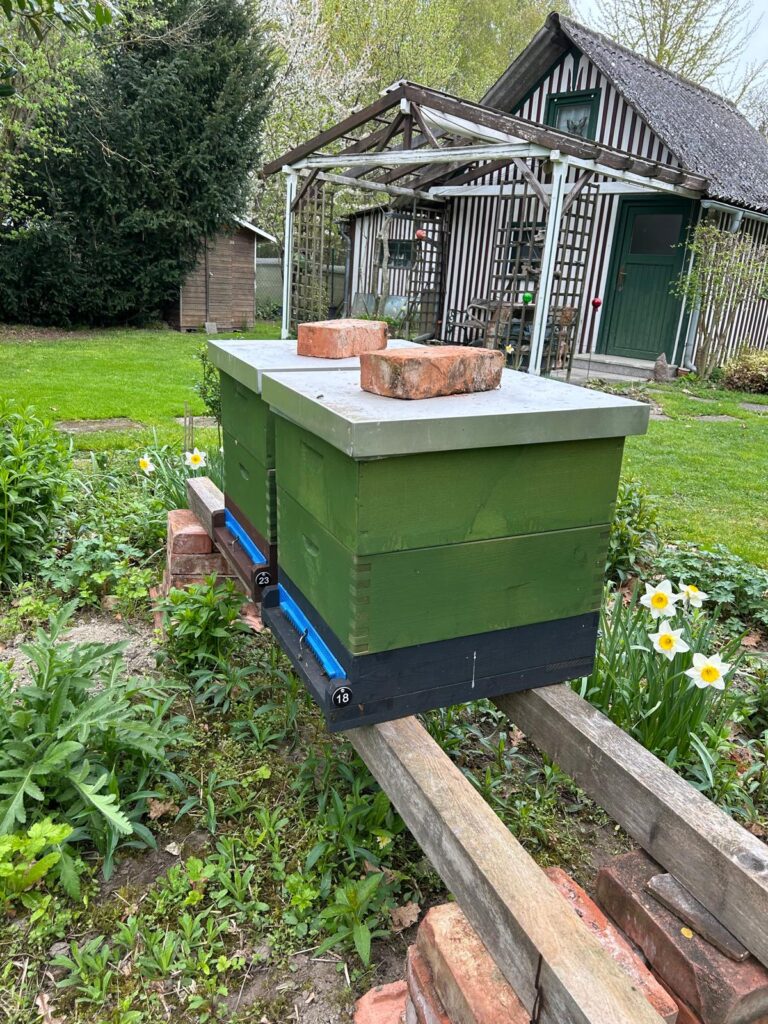
Small apiaries, carefully placed across the landscape. More space for the bees, less pressure on nature.
Honey is not created in isolation. It comes from a landscape — from trees, meadows, hedges, orchards, flowers, weather and time.
That is why we do not keep our bees in large, crowded apiaries.
Instead, we work with small apiaries and only a limited number of colonies per location. This means more travel, more logistics, more equipment and more time. But it is part of our keeper philosophy: fewer colonies in one place, less pressure on the surrounding landscape.
In nature, honey bee colonies are not usually lined up side by side. Scientific literature describes natural inter-colony distances ranging from hundreds of meters to several kilometres. The natural average distances between natural hives is ranging from 300 to 5,000 metres.
This matters. Crowding honey bee colonies can increase the conditions that allow parasites and diseases to move between colonies. When colonies are crowded in apiaries, mites can be spread through drifting and robbing.
Small apiaries are also a matter of food. Nectar and pollen are not unlimited resources. Highdensity beekeeping can trigger foraging competition and reduce nectar and pollen harvesting not only for wild bees, but also for the honey bees themselves.
For us, this is not about avoiding beekeeping. It is about avoiding beekeeping as mass
placement. We prefer smaller stands, placed in more structured landscapes — near trees, orchards, hedges and meadows — not simply where it is easiest to park and load or unload a vehicle. These locations are more demanding to
manage, but they are closer to the way we believe bees should be kept: with space, with forage, and with respect for the other pollinators sharing the same landscape.
This is one reason our honey is limited.
We choose not to concentrate as many colonies as possible in one convenient place. We choose smaller apiaries, more work, and less pressure on the land.
The bees make the honey.
We simply give them more space to do it well.
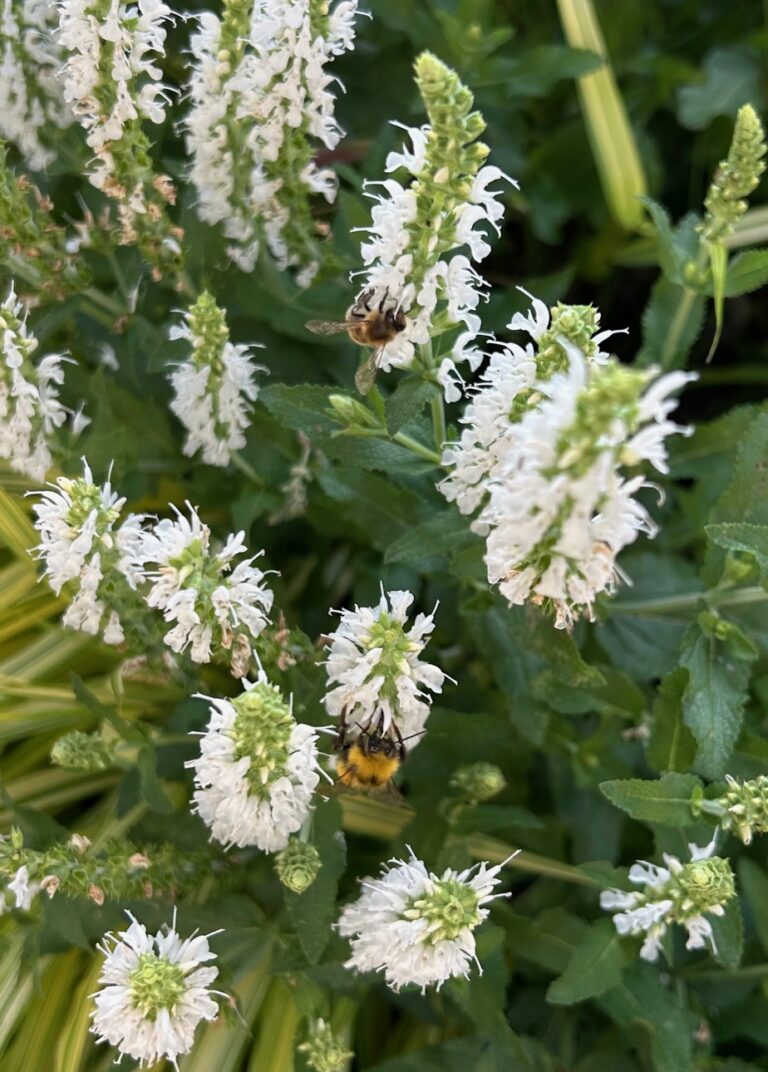
A true expression of season, landscape and bee choice — not a single flower, but nature as a whole.
We do not produce monofloral honey.
Not because monofloral honey is wrong — but because it is not our philosophy.
Our honey is a limited annual harvest of what the bees find between the first spring blossoms and July: trees, meadows, hedges, orchards, wildflowers, herbs and everything the landscape offers in that particular year.
We do not move our bees into monocultures to chase a single floral source. We do not force a story of purity where nature itself is mixed, complex and alive. The Codex standard allows honey to be described by floral source only when it comes wholly or mainly from that source and has the corresponding sensory, physicochemical and microscopic properties. For us, that is not the goal. Our goal is not a single-source honey.
Our goal is a true expression of landscape, season and bee choice.
Bees are not machines for producing varieties. They are living colonies that make decisions every day. They know where nectar is flowing, where pollen is available, and which blossoms are worth visiting. We trust that intelligence.
This is also why we are critical of monoculture as a beekeeping ideal. Nectar and pollen are not unlimited resources, and floral diversity matters. Research on honey bee nutrition supports the idea that pollen quality and diversity can shape bee physiology and help explain the link between agricultural landscapes, nutrition and bee health. High-density beekeeping can also trigger foraging competition and reduce nectar and pollen harvesting, not only for wild bees, but also for honey bees themselves.
So we do not ask our bees for maximum yield at any cost. We do not measure success by how many boxes we can stack, or how much honey we can take. More harvest is not always better beekeeping. Sometimes better beekeeping means leaving room, reducing pressure, and accepting that nature decides the flavour.
Our honey is therefore not a variety designed for a label.
It is a season, carefully kept.
The bees make the honey.
We simply preserve the harvest.
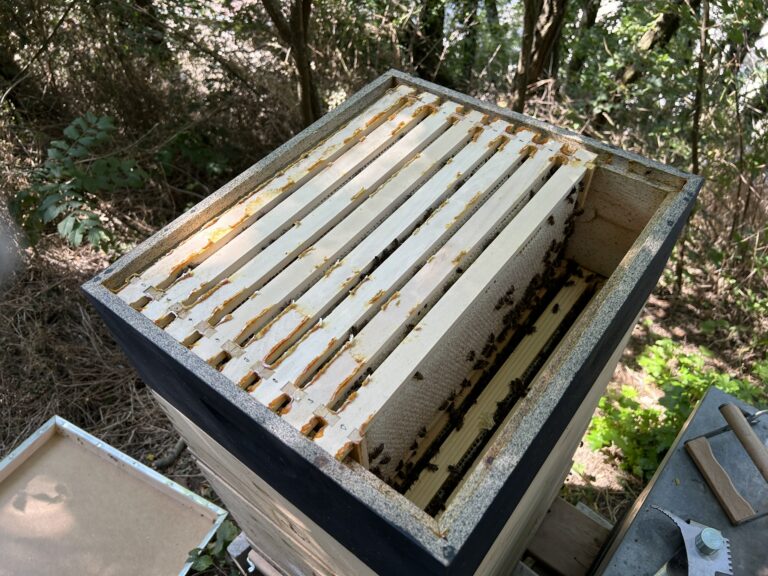
A limited harvest, taken only once the season has given enough — and only what the bees can spare.
We do not harvest continuously.
Our honey is a limited annual harvest — taken only when the season has given enough, and only when we can do it responsibly.
Honey is not just a product. For bees, honey is stored energy. It is winter fuel. In cold climates, honey bee colonies consume large amounts of food over winter — often 20-25 kg of honey or more — while having only a limited season to collect and store it.
That is why we do not measure success by maximum extraction.
We believe that part of the value of our honey lies in what we do not take. More honey left in the hive means less pressure on the colony and a more respectful relationship with the bees’ own rhythm. The honey in the jar is only one part of the harvest. The rest remains where it matters: with the bees.
In modern beekeeping, honey is often removed and replaced with artificial carbohydrate feeds. Research describes honey as the bees’ natural carbohydrate source, while artificial feeds such as sucrose syrup, invert syrup or high-fructose syrup are used as substitutes in management.
We do not turn this into a dogma. Feeding can be necessary, and responsible beekeeping sometimes requires it. But for us, feeding is a safety net — not the principle.
Our principle is simple: the bees make the honey first for themselves. We only take what we can take with respect.
This is one reason our honey is limited.
You are not only buying the honey in the jar. You are supporting the honey that stays in the hive, the extra care, the slower rhythm, and the choice not to push the colonies for maximum yield.
The bees make the honey.
We harvest less, so they can keep more.
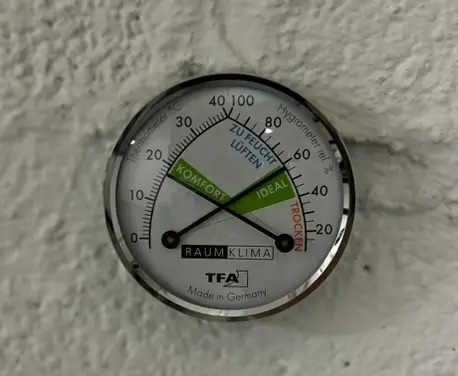
Crystallisation is not a defect. It is simply honey behaving naturally.
We do not force honey to look the same forever.
Honey is a natural product, and its texture can change over time. Depending on the blossoms, the season, the natural sugar composition and storage conditions, honey may remain liquid for a long time — or it may begin to crystallise.
For us, crystallisation is not a defect. It is part of honey’s natural behaviour.
International honey standards recognise honey in both liquid and crystalline form. Honey is described as a product that may be fluid, viscous, partly crystallised or entirely crystallised. It also states that chemical or biochemical treatments should not be used to influence honey crystallisation.
That fits our keeper philosophy.
We do not design honey for a permanent shelf appearance. We do not treat natural change as a problem. We handle honey carefully, explain its texture honestly, and allow each harvest to show its own character.
A jar of honey is not an industrially fixed product. It is a preserved season.
The bees make the honey.
We do not force it to pretend otherwise.
Organic is not a marketing extra. It is the foundation of how we keep our bees.
Organic is not an ornament for us. It is a discipline.
For a premium food, organic production should not be a marketing extra. It should be the starting point: a clear commitment to stricter rules, documented work, controlled inputs, traceability and external verification.
That is why we work according to the organic standard and submit our beekeeping to independent control.
Organic certification is not based on trust alone. In the European Union, organic farmers must be certified through a recognised control body, and this includes a yearly inspection and a set of checks to verify compliance with organic production rules. The European Commission describes organic certification as a system of control that helps build consumer trust, because organic goods are inspected regardless of where in the EU they originate.
For us, this matters.
We do not want our customers to rely only on a beautiful story, a nice jar or carefully chosen words. We want our work to be checked. Organic certification means that our beekeeping, our records, our inputs and our handling are subject to regular external review.
This fits our keeper philosophy. Our responsibility is to create conditions that respect them — and to make that responsibility transparent.
Organic certification is therefore not only about premium positioning. It is about accountability. It is a way of saying: Do not just believe us, our work is documented, inspected and certified.
The bees make the honey.
We keep the promise under control.
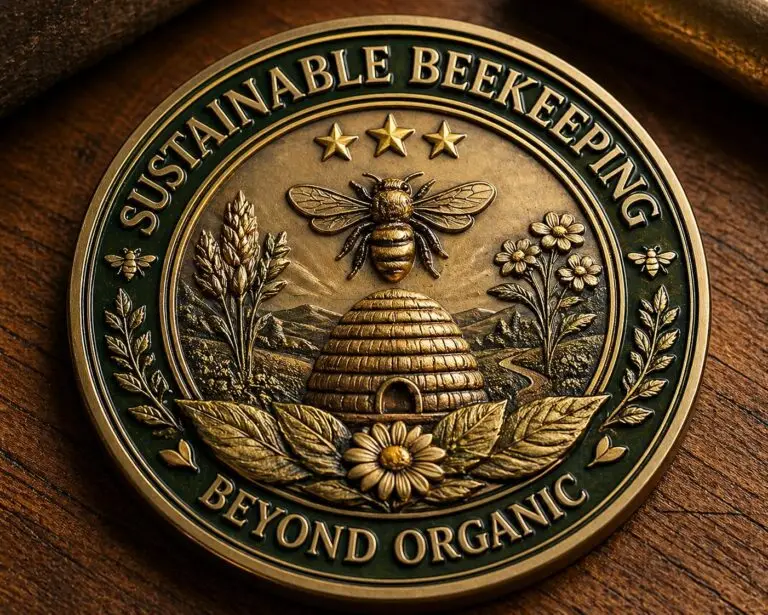
Sustainability is not a label. It is an operating principle.
Sustainability is not a label for us. It is an operating principle.
Our beekeeping requires movement: to the apiaries, for inspections, for harvesting, and for caring for the colonies. Because we deliberately work with many small locations, our logistics are more complex than they would be with one large central apiary. We accept this additional effort — but we try to manage it as responsibly as possible.
That is why our own operation is powered by 100% renewable energy. Our home and workplace are supported by photovoltaic systems, and most of our beekeeping trips are carried out electrically: with an electric car and a plug-in utility vehicle. Around 90% of our trips to the bees are made electrically.
We also take responsibility for packaging and waste. We are registered in accordance with the applicable EU and Austrian packaging requirements and participate in a collection and recovery system. This ensures that the obligations arising from our packaging are not ignored, but properly included in the system for collection, recovery and recycling.
This does not mean that our work has no footprint. Glass, transport, packaging, materials and processing all require resources. But it means that we consciously shape the areas we can influence: our own solar energy, electric mobility, planned routes, durable materials, responsible packaging participation and a way of beekeeping that is not designed for maximum volume, but for responsibility.
We also think in cycles within the beekeeping operation itself: wax is not treated as waste, but processed further. Honey is not extracted to the maximum, but partly left with the colony. Locations are not chosen only for convenience, but for landscape, forage and structure.
For us, sustainability is not an addition to the brand. It is part of the way we keep bees.
The bees make the honey.
We try to make the path to it as mindful as possible.
To provide the best experiences, we use technologies like cookies to store and/or access device information. Consenting to these technologies will allow us to process data such as browsing behavior or unique IDs on this site. Not consenting or withdrawing consent, may adversely affect certain features and functions.
Um die besten Erlebnisse zu bieten, verwenden wir Technologien wie Cookies, um Geräteinformationen zu speichern und/oder darauf zuzugreifen. Wenn Sie diesen Technologien zustimmen, können wir Daten wie das Surfverhalten oder eindeutige IDs auf dieser Website verarbeiten. Wenn Sie Ihre Zustimmung nicht erteilen oder widerrufen, können bestimmte Merkmale und Funktionen beeinträchtigt werden.
