


FIELD NOTES
Published August 2026
Donnerskirchen, Austria
How flowering plants and bees have changed each other over millions of years
A landscape does not bloom for us. Not for our photos. Not for our gardens.
And not so that a meadow looks especially beautiful in spring.
A flower is part of a plant’s reproduction. Its shape, its scent, its nectar and its pollen belong to a story that began long before humans.
Bees are part of that story.
They visit flowers because they are looking for food. In doing so, they carry pollen from plant to plant. This makes reproduction possible, influences the success of individual plants and, over many generations, helps to shape flowering landscapes.
Not consciously.
Not according to a plan.
And yet they leave their mark.
In this sense, bees paint the world.
Plants colonised the land long before the first flowering plants appeared.
There were ferns, mosses, horsetails and seed plants. Pollination by insects also existed before the great spread of flowering plants. Some early insects visited the reproductive organs of gymnosperms and transferred pollen in the process.
The shared history of plants and insects therefore did not begin with the first bee.
With the spread of flowering plants, however, terrestrial ecosystems changed fundamentally. Especially during the Cretaceous, many of the major lineages from which today’s diversity of flowering plants emerged arose and diversified.
Fossils and family trees do not tell a simple story in which flowers suddenly appeared and pollinators followed. Plants, insects, climate and landscape influenced one another over long periods of time. The spread of flowering plants created new food sources and ecological opportunities, while insects already brought abilities they could use to exploit these plants.
What we see as a flower is a reproductive organ.
It produces pollen, which contains the plant’s male germ cells. For seeds to form, suitable pollen has to reach the receptive parts of a flower.
Some plants leave this work to the wind.
Others use animals.
Flower-visiting insects receive food in return. Nectar mainly provides carbohydrates. Pollen contains protein, fats, vitamins and minerals, among other things, and is essential for raising brood.
So the plant offers something.
The insect takes something away.
And as it visits the next flower, pollen can be transferred.
This creates a relationship from which both sides can benefit.
But it is not a contract entered into consciously.
The plant does not want to help.
The bee does not want to pollinate.
The plant reproduces more successfully when pollen reaches the right place. The bee is looking for food for itself and its colony.
Pollination arises where these interests overlap.
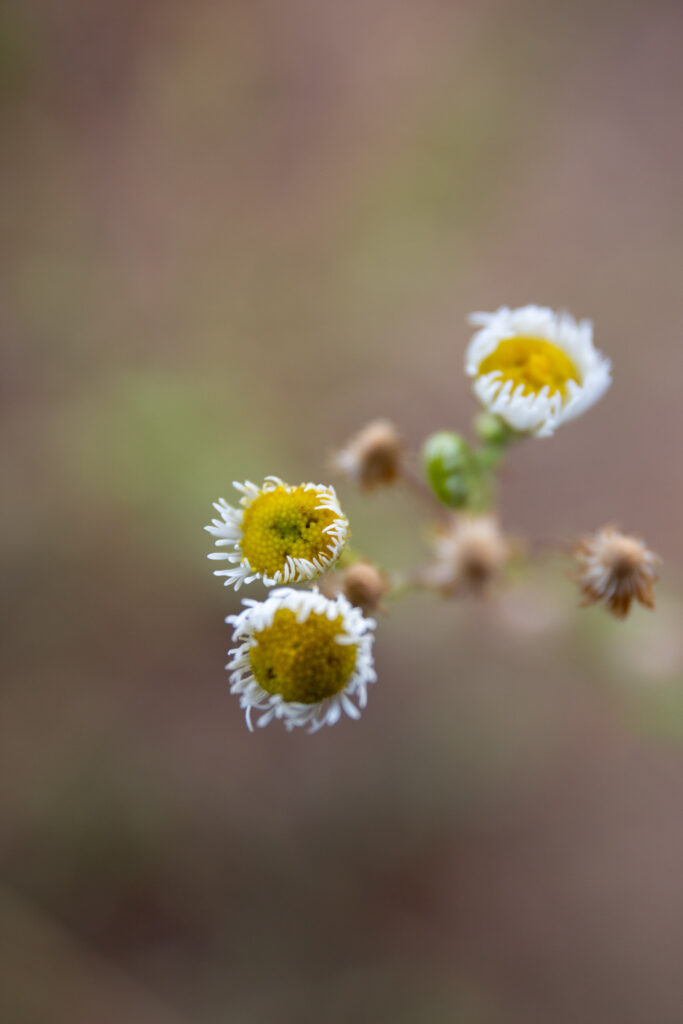
When two groups of organisms influence each other over many generations, we speak of coevolution.
This does not mean that a particular bee species and a particular plant species always evolved together as a fixed pair.
In natural communities, such close one-to-one relationships are comparatively rare. Usually several insect species visit the same plant species. At the same time, a bee uses different plants during its life or over the course of a season.
Development therefore often takes place within entire networks.
Plants are influenced by different pollinators.
Pollinators respond to numerous plants.
Flowering time, abundance, weather, soil, herbivores and competition also play a part.
Coevolution is therefore not a perfect duet between two species.
It is more like a many-voiced ensemble that is constantly changing. Studies of natural pollination networks show that shared evolutionary history, floral traits, overlapping timing and the abundance of species together determine which animals visit which plants.
Bees are descended from wasp-like ancestors.
While their ancestors collected animal prey for their offspring, early bees developed a way of life based on pollen and nectar.
This shift had far-reaching consequences.
The body had to be able to collect and carry pollen.
Mouthparts had to fit the flowers being used.
The perception of scent and colour became important for finding suitable plants.
The ability to learn helped them recognise productive flowers.
Today there are more than 20,000 described bee species with very different body sizes, mouthparts, pollen-carrying structures and diets.
Phylogenetic studies suggest that bees originated in the early Cretaceous and that many of their major lineages diversified during the same period in which numerous groups of flowering plants were becoming more diverse. This does not mean that plants alone drove the evolution of bees. But it shows that the two stories are closely intertwined.
The plants did not remain unchanged either.
If animals visit certain flowers more often than others, this can affect reproductive success.
A flower that is easier to find may receive more visits.
A shape that makes pollen stick particularly reliably to a pollinator’s body can improve transfer.
A flowering time that coincides with the appearance of suitable insects can be an advantage.
Such differences do not shape the evolution of a species within a single summer. They take effect over many generations.
Plants with traits that lead to more successful pollination under the given conditions leave more offspring. As a result, these traits can become more common in a population.
Pollinators are therefore not conscious breeders.
But their choices create selection pressure.
Which flower is visited, how long an animal stays there and whether the pollen reaches another suitable flower can help determine which plants pass their traits on to the next generation.
Fossil flowers and pollen show that relationships between early flowering plants and specialised pollen-visiting insects already existed in the Cretaceous. At the same time, this development was more complex than a single shared “explosion” of biodiversity.
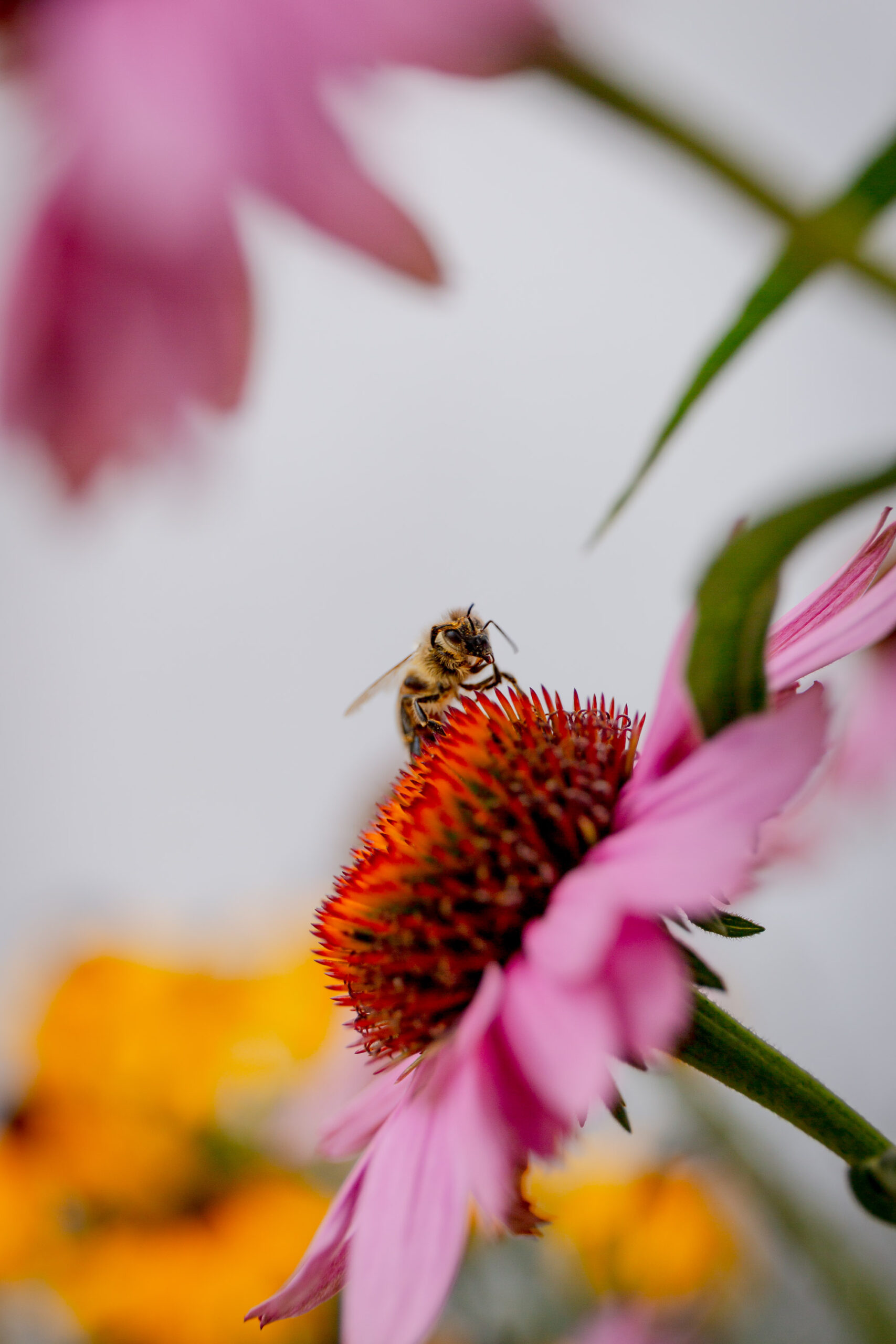
Today the honey bee is one of the best-known flower visitors.
But it is not the only one.
Wild bees, bumblebees, flies, beetles, butterflies, wasps, birds and other animals can pollinate plants. Some plants are also, or exclusively, pollinated by the wind.
Even among bees, relationships with plants differ considerably.
Some species collect pollen from many plant families.
Others specialise in a few plant groups.
Some flowers can only be used by insects that fit their shape, depth or way of functioning.
That is why the honey bee is no substitute for the diversity of wild pollinators.
And more honey bee colonies do not automatically mean greater biodiversity.
A species-rich landscape needs different plants, different habitats and different pollinators.
The relationship between flowers and bees is not a single thread.
It is a web.
Bees do not carry a brush.
They do not decide what a landscape should look like in a hundred years.
The phrase is an image.
With every flower visit, a bee can move pollen.
Through successful pollination, it can help fruits and seeds to form.
New plants grow from seeds.
New plants in turn change the food supply, the habitat and the appearance of a landscape.
So a single bee does not paint a meadow.
A single flight does not create a plant species.
But billions of flower visits over countless generations are among the processes through which flowering communities are preserved and changed.
The bees do not paint alone.
Soil and climate paint too.
Wind and water.
Other pollinators.
Herbivores and pathogens.
And today, to a particularly great extent, humans.
The evolutionary relationship between plants and pollinators developed over millions of years.
A landscape, however, can be fundamentally changed within a few decades.
When species-rich meadows disappear, verges are mown frequently or large areas offer only one plant species at the same time, the food supply for insects changes immediately.
Not every flowering plant offers the same amount or quality of nectar and pollen.
And not every plant species is equally valuable to all pollinators: knapweeds, chicory, viper’s bugloss, bellflowers, clovers and many other plants each matter differently to honey bees, wild bees, hoverflies and butterflies. Pollination, in turn, enables seeds to form and thus helps the plants to survive.
A diverse meadow is therefore not just a larger number of flowers.
It is a larger number of different relationships.
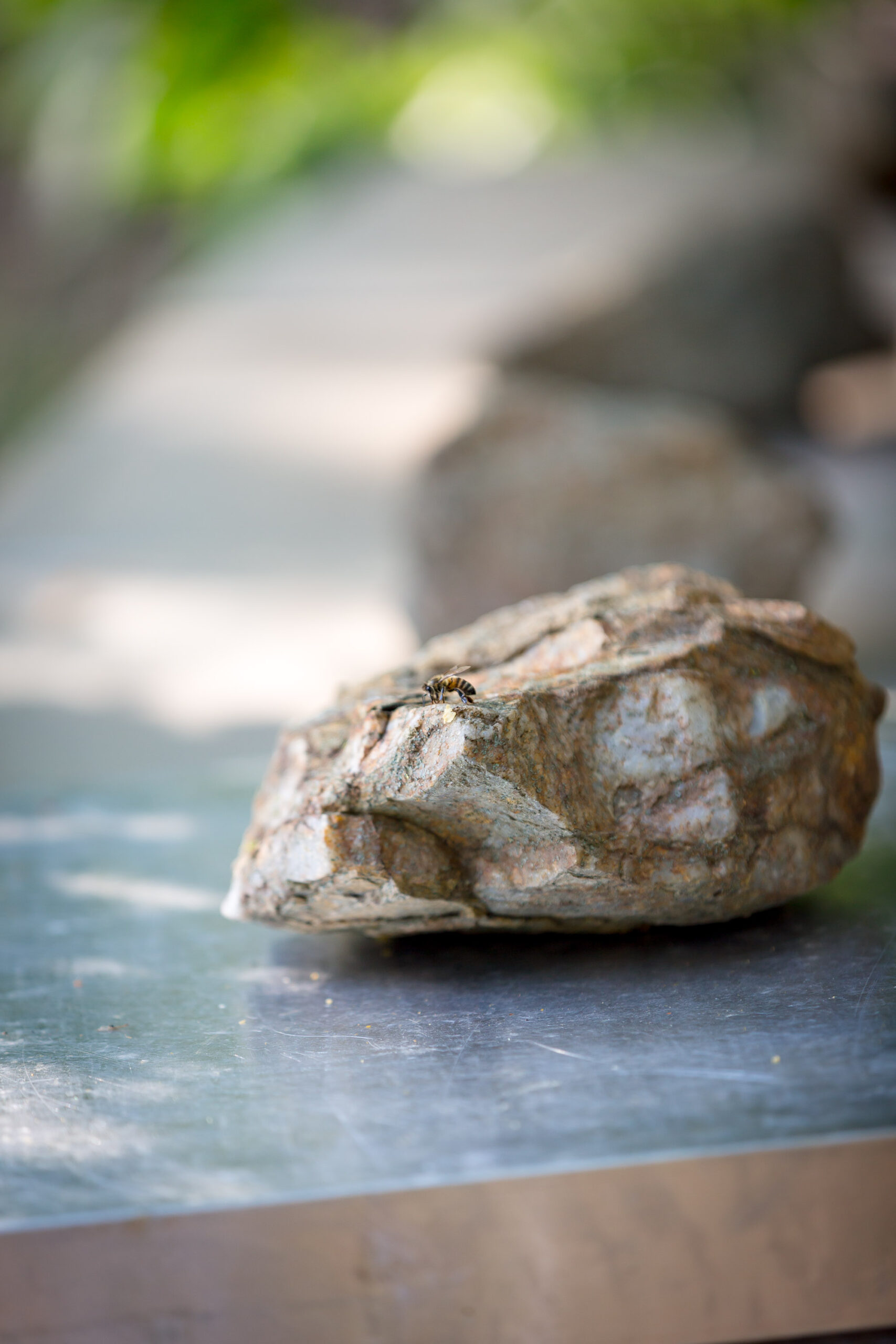
A productive nectar flow can be valuable for a bee colony.
Black locust.
Lime.
Rapeseed.
Sunflower.
A large number of plants flowering at the same time can supply a lot of nectar in a short time.
For the long-term supply of a colony, however, a single strong flow is not enough.
Bees need different sources of pollen and nectar over as long a period as possible. When a mass flow ends, the landscape must continue to provide food.
In spring.
In early summer.
During dry weeks.
And after the honey harvest, too.
That is why it is not only how much flowers that matters.
What also matters is what flowers when.
A landscape with vineyards, meadows, woodland edges, verges, rows of trees and near-natural gardens can provide different sources throughout the season.
This does not automatically make it ecologically valuable.
But its diversity of structures creates opportunities.
Honey is not a picture of the landscape in a literal sense.
It does not contain a complete map of all plants or a visible history of their evolution.
But how it comes into being is tied to a specific landscape and a specific time.
The bees collect what is within reach during a particular season.
Which plants are flowering.
Which offer nectar.
How warm or dry the weather is.
Which sources are productive.
And which the foragers prefer.
That is why honey differs from site to site and from year to year.
It is not made from a recipe.
It comes from conditions.
From plants.
From weather.
From soil.
From the behaviour of a bee colony.
And from that ancient relationship between flower and pollinator, which began long before our beekeeping.
People like to see landscape as a backdrop.
As something that is simply there.
But our decisions change it.
How often an area is mown.
Which plants are grown.
Whether native wildflower seed is used.
Whether field margins are allowed to flower.
Whether other food sources remain once a mass flow has ended.
We cannot plan the long shared development of plants and pollinators.
But we can decide whether it still finds room in today’s landscape.
Over millions of years, bees have helped to shape flowering communities.
We can weaken these relationships within a short time.
Or create conditions in which they endure.
We do not create the flowers.
We do not decide which plant gives off nectar.
We do not tell any bee which flower to visit.
And we do not design the relationships that have linked plants and pollinators for millions of years.
We can only pay attention to what is already there.
We can allow diversity.
We can give the bees space.
We can leave them more stores than we take.
And we can preserve what they have carried from a landscape into their colony.
Kept. Not Made.
Not made by humans.
Offered by the plants.
Found, collected and transformed by the bees.
Harvested and preserved by us.
Robert E. Page: Die Kunst der Bienen. Wie Bienenvölker unsere Welt gestalten. C.H.Beck, München 2025
Cardinal, S. and Danforth, B. N.: Bees diversified in the age of eudicots. Proceedings of the Royal Society B, 2013.
Almeida, E. A. B. et al.: The evolutionary history of bees in time and space. Current Biology, 2023.
Hu, S. et al.: Early steps of angiosperm–pollinator coevolution. Proceedings of the National Academy of Sciences, 2008.
Peris, D. and Condamine, F. L.: The angiosperm radiation played a dual role in the diversification of insects and insect pollinators. Nature Communications, 2024.
Frühwirth, P. H. and Peratoner, G.: Wiesenpflanzen für Honigbienen and wilde Bestäuber. Biene Österreich, Wien 2025.
“The bees make the honey. And their relationship with the flowers has helped to shape the world it comes from.”
To provide the best experiences, we use technologies like cookies to store and/or access device information. Consenting to these technologies will allow us to process data such as browsing behavior or unique IDs on this site. Not consenting or withdrawing consent, may adversely affect certain features and functions.
Um die besten Erlebnisse zu bieten, verwenden wir Technologien wie Cookies, um Geräteinformationen zu speichern und/oder darauf zuzugreifen. Wenn Sie diesen Technologien zustimmen, können wir Daten wie das Surfverhalten oder eindeutige IDs auf dieser Website verarbeiten. Wenn Sie Ihre Zustimmung nicht erteilen oder widerrufen, können bestimmte Merkmale und Funktionen beeinträchtigt werden.